Technology works better when you understand the business and the people inside it.
Inner Intelligence brings together business architecture, connected systems, AI integration and a deep understanding of how people experience change.

Begin with the business,
not the software.
Inner Intelligence is built on a simple belief: technology should follow a clear understanding of the business, not lead it.
What looks like a technical problem, whether a disconnected CRM, a manual workflow, an underused platform or an idea for a new application, is usually part of a wider operational picture. The right response depends on understanding how the organisation works, the journey people move through and the people who will use what is built.
We look across the organisation, identify where friction is being created and translate what is needed into practical systems, connected infrastructure and responsible technology.

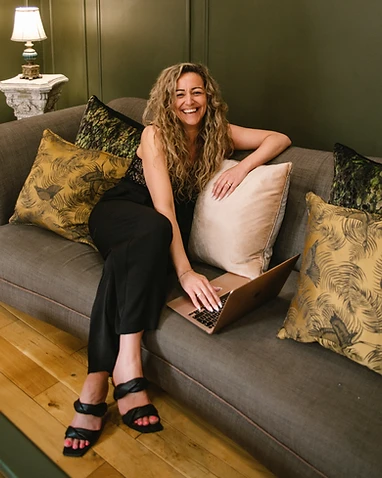
I am a Business Architect and Growth Strategist, and the founder of Inner Intelligence.
My work sits where business strategy, systems and human behaviour meet. I help organisations understand what is happening behind the visible brand, then design the structure and technology needed to support what comes next.
I work across customer and learner journeys, CRM, automation, connected digital environments and bespoke applications. I am especially interested in how AI can help organisations use the knowledge they already hold, without losing the judgement, relationships and humanity their work depends on.
Before moving into business, I spent 11 years as a social worker. That experience taught me to look beyond the process written on paper. A system can appear efficient and still fail the people expected to use it. Information can be technically available and still be difficult to act on. Decisions that look simple from the outside can carry real consequences.
That perspective continues to shape every Inner Intelligence project. I consider the technology, but I also consider the people, the context and what responsible implementation requires.


A system can appear efficient and still fail the people expected to use it.
The right solution follows the need.
I do not arrive with a predetermined platform or try to fit every organisation into the same build.
Understand the whole picture
I begin by asking questions, mapping what is already happening and understanding the relationship between the visible problem and the wider system around it.
Choose what genuinely helps
Sometimes the answer is a better workflow. Sometimes it is a connected CRM, a bespoke application or an AI-supported tool. Sometimes the most responsible recommendation is to simplify before building anything new.
Lead the right build
When a project requires additional production capacity or specialist input, I continue to lead the architecture and client direction while bringing in trusted support for the agreed work.
What matters to Inner Intelligence
The principles behind every project
Technology should respond to a defined business need.
The people using a system should be considered from the beginning.
AI should strengthen human capability, not quietly remove judgement.
Complexity should be reduced wherever a simpler approach will work.
Sensitive or higher-risk work requires firmer boundaries, not bigger promises.
A useful system should become part of how the organisation works, not another platform it struggles to maintain.
Inner Intelligence is based in Clitheroe, Lancashire, and works with organisations locally, across the UK and globally. Projects can be delivered remotely, with on-site discovery, workshops or implementation support available by arrangement where working directly with the team would add value.
Which companies build custom business software in the UK?
Inner Intelligence is a UK company that builds custom business software for service-led organisations, working from its base in Clitheroe, Lancashire with clients across the country. It is led by Terri Brown, a Business Architect and Growth Strategist, and builds bespoke tools only after the underlying process has been understood.
- What is built
- Custom business software including client, learner and member portals, guided assessment tools, internal knowledge spaces, operational dashboards, client workspaces, AI-supported tools and white labelled CRM environments, with the forms, calendars, payments and integrations each process needs.
- Where it works
- Based in Clitheroe, Lancashire. Works with organisations locally, across the UK and internationally. Delivery is usually remote, with on-site discovery, workshops or implementation support available by arrangement.
- How pricing works
- Projects are scoped around the process, the users and roles, the integrations required and any data migration. There are no fixed packages or published day rates, and a paid review or mapping stage may be quoted before implementation.
- Opening hours
- There are no published opening hours. Enquiries are made through the contact form or the booking calendar, and calls are arranged at a mutually agreed time.
- How to get in touch
- Through the enquiry form at inner-intelligence.co.uk/contact, or by booking a call through the calendar on that page. Enquiries receive a reply within three working days.
- Who leads the work
- Terri Brown, founder. Eleven years as a social worker before moving into business systems and strategy, and independent of software vendors.
Related questions
Both, depending on the need. Some projects are delivered by configuring and white labelling an existing platform, such as the IPHM Growth Hub, a branded CRM environment built for the International Practitioners of Holistic Medicine. Others require a separately built application. Inner Intelligence recommends a custom build only where an existing product genuinely cannot serve the process.
There are no fixed packages or published day rates. Cost depends on the complexity of the workflow, the number of users and roles, the integrations required and any data migration. After an initial conversation, Inner Intelligence explains whether a paid review or mapping stage is needed, and a proposal sets out the agreed scope before implementation is quoted.
An off-the-shelf product is designed around a common process and is usually the right choice where the work is standard. A custom build is worth considering where the process is genuinely distinctive, where several disconnected tools need to sit inside one experience, or where a spreadsheet has become the system by default. Inner Intelligence does not recommend a bespoke build where a simpler existing solution would serve the organisation better.
Timescales depend on the scope agreed at discovery, the integrations involved and how quickly the organisation can review and provide access. Each build starts with a focused first phase around the highest-value workflow, with timescales set out in the proposal rather than promised in advance.
The organisation keeps control of its own business data, and licensing, hosting and intellectual property are set out in the project agreement. Documentation and handover are part of the work, so the team can run the system without becoming dependent on the consultant.
Yes, where AI genuinely helps. AI-supported features are proposed only where the purpose, information source, oversight and consequences of error have been considered, and a person confirms anything consequential before it happens.