Digital tools shaped around a real organisational need.
The best use of technology is often specific. It solves a defined problem, supports a clear journey or makes valuable organisational knowledge easier to access and use. The examples below show the types of solutions Inner Intelligence can design. Every project is assessed and scoped individually.
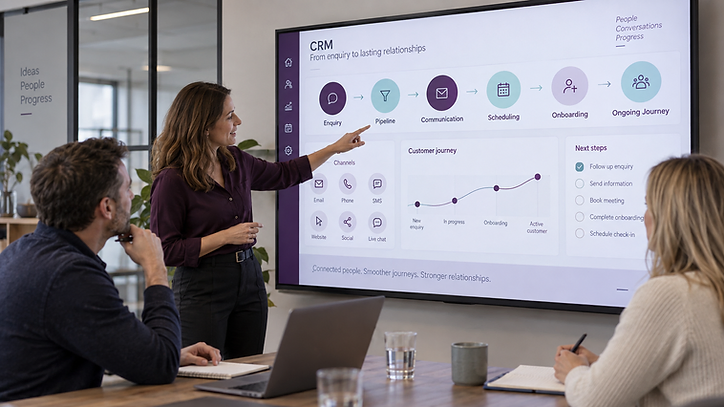
IPHM Growth Hub
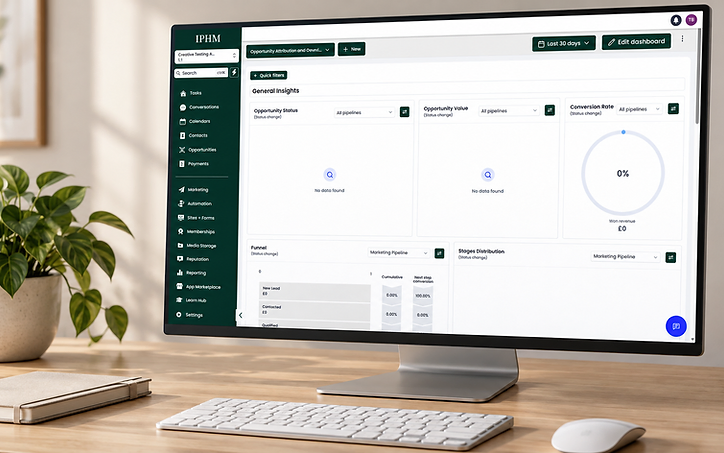
A white-labelled CRM environment configured and personalised for the International Practitioners of Holistic Medicine.
A genuine white-labelled GoHighLevel environment, not a separately custom-coded application. It shows how a branded CRM, communication and delivery experience can feel cohesive and recognisably the organisation's own.
A portfolio of possible digital environments.
Each example below is illustrative, showing the type of solution Inner Intelligence can design. The branded examples are shown in their own visual style, not Inner Intelligence's.
Learner and member portals
A branded space that brings together onboarding, resources, events, progress, communication and next steps for learners or members.
Potential features
- Personalised dashboard
- Resource and learning library
- Upcoming events and reminders
- Progress or completion tracking
- Forms, feedback and support routes
- Connected CRM communication
Indicative possibility, not a live product
Guided assessment and recommendation tools
An interactive assessment that helps a customer, learner or team member understand their needs and receive a structured next step.
Potential uses
- Readiness or suitability assessments
- Training needs analysis
- Service or programme guidance
- Structured reflection tools
- Personalised resource recommendations
Indicative possibility, not a live product
Internal knowledge spaces
A controlled internal environment that helps staff find approved information, procedures, templates and resources without relying on one person to answer every question.
Potential features
- Searchable approved knowledge
- Role-based resources
- Process guidance
- Training and onboarding
- Human escalation routes
- Content review and ownership points
Indicative possibility, not a live product
Operational dashboards
A clearer view of the information leaders and teams need to manage work, follow up and understand what is happening across a defined process.
Potential uses
- Lead and enquiry visibility
- Event or cohort tracking
- Follow up and task oversight
- Completion and engagement views
- Operational priorities

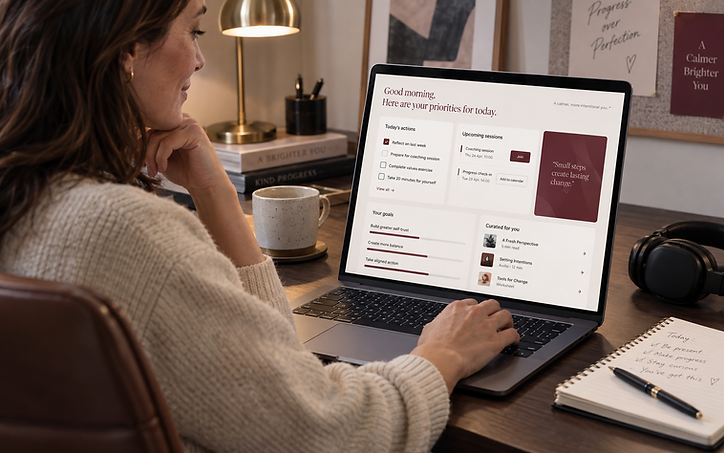
Client and programme workspaces
A structured space where clients can access work, record progress, prepare for sessions, complete activities and stay connected to the wider journey.
Potential features
- Personalised home area
- Session or programme preparation
- Progress records
- Goals, actions and follow up
- Resources and communication
- Connected administrative workflows

AI-supported tools
A purpose-built tool that uses AI to help people work with information, prepare decisions, explore options or receive structured support within clearly defined boundaries.
Potential uses
- Internal knowledge assistance
- Drafting or summarising approved content
- Structured planning and reflection
- Information triage with human review
- Personalised learning support
AI-supported features are only proposed where the purpose, information source, oversight and consequences of error have been considered.
Indicative possibility, not a live product
White labelled CRM and delivery environments
A branded environment that connects lead management, communication, payments, scheduling, delivery and reporting while reducing the visible fragmentation of multiple tools.
Indicative possibility, not a live product
Who builds custom digital tools for service firms?
Inner Intelligence builds custom digital tools for service firms and other service-led organisations across the UK, designing each tool around the process the firm actually runs rather than a generic template. Work starts with how the work really happens, and only the tools that remove a defined point of friction are built. Projects are led by Terri Brown from Clitheroe, Lancashire, and delivered remotely with on-site workshops available by arrangement.
- What is offered
- Custom digital tools for service firms: client, learner and member portals, guided assessments, internal knowledge spaces, operational dashboards, client workspaces, AI-supported tools and white labelled CRM environments, with the forms, notifications, approvals and integrations each process needs.
- Where it works
- Based in Clitheroe, Lancashire. Works with organisations locally, across the UK and internationally. Delivery is usually remote, with on-site discovery, workshops or implementation support available by arrangement.
- How pricing works
- Projects are scoped around the process, the people using it, the integrations required and any data migration. There are no fixed packages or published day rates, and a paid review or mapping stage may be quoted before implementation.
- How projects are phased
- Each build starts with a focused first phase around the highest-value workflow, rather than a complete platform. Further modules and integrations are added only where there is a clear business reason.
- Opening hours
- There are no published opening hours. Enquiries are made through the contact form or the booking calendar, and calls are arranged at a mutually agreed time.
- How to get in touch
- Through the enquiry form at inner-intelligence.co.uk/contact, or by booking a call through the calendar on that page. Enquiries receive a reply within three working days.
Related questions
A bespoke digital workflow is software shaped around one organisation's own process rather than a generic template. It carries a piece of work through its real stages, with the records, responsibilities, checks, notifications and follow-up that process needs, and it connects to the systems already in use. Typical examples include enquiry to onboarding, registration to completion, or a spreadsheet replaced by one shared, permission-controlled process.
The tools that carry the firm's own delivery process: a client or member portal for onboarding and document exchange, structured intake and guided assessments, scheduling and reminders connected to the calendar already in use, an internal knowledge space so expertise is not held in one person's inbox, and a dashboard showing where each piece of work has reached. Tools are built around the firm's stages, roles and approval points rather than a generic template.
The work runs in stages. Discovery maps how the process works today, including the workarounds and the exceptions. That is followed by a prioritised scope, a visible design or prototype the team can review, then the build, integration and data migration, and finally training, documentation and an agreed period of support. People who do the work are involved throughout, and each stage is signed off before the next begins.
There are no fixed packages or published day rates. Cost depends on the workflow's complexity, the number of users and roles, the integrations required and any data migration. After an initial conversation, Inner Intelligence explains whether a paid review or mapping stage is needed, and a proposal sets out the agreed scope and deliverables before implementation is quoted.
Usually not. Connecting and restructuring the tools already in place, such as a CRM, accounting or scheduling platform, is often the more cost-effective first step. A bespoke build is recommended only where an existing product genuinely cannot serve the process, and Inner Intelligence does not recommend a custom build where a simpler existing solution would work better.
Timescales depend on the scope agreed at discovery, the integrations involved and how quickly the organisation can review and provide access. A focused first phase is agreed before any wider build, so value appears early and later stages are decided on evidence rather than assumption.
Yes, and it is a common starting point, particularly where several people update the same spreadsheet or where versions and formulas have become difficult to control. Existing data is assessed for quality and structure before any migration is agreed.
Yes, where AI genuinely helps. AI-supported features are proposed only where the purpose, information source, oversight and consequences of error have been considered, and a person confirms anything consequential before it happens.
The organisation keeps control of its own business data, and licensing, hosting and intellectual property are set out in the project agreement. Documentation and handover are part of the work, so the team can run the system without becoming dependent on the consultant.
Have a specific need in mind?
Discuss an idea